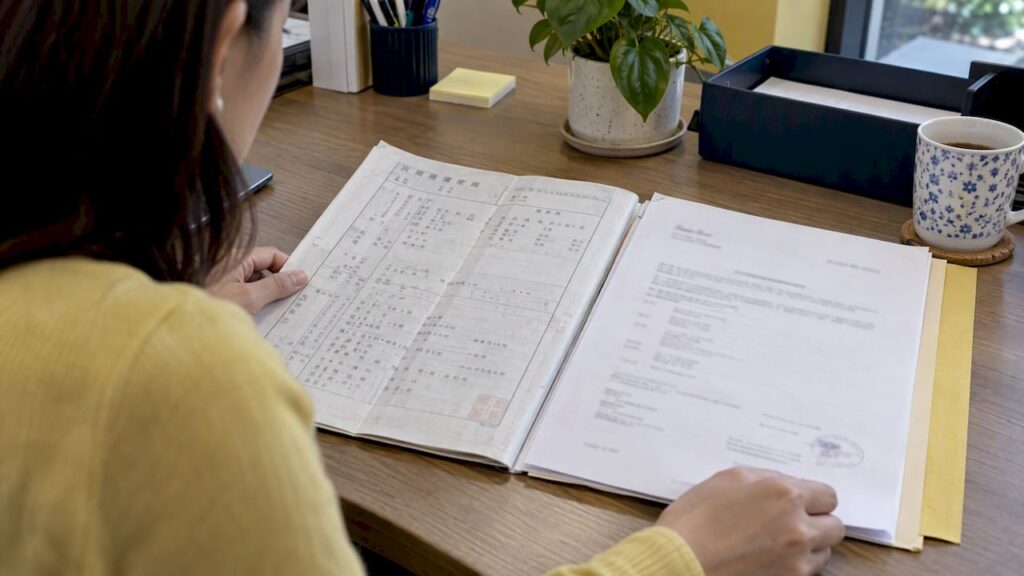
If a government department, university, court or employer in Australia has asked for a Spanish document in English, you almost always need a certified translation. That means the translator holds a NAATI credential and has stamped and signed the translation. We do this at Stellar Translations: our NAATI-certified service covers Spanish and more than 170 other languages, and it is built for official use across Australia.
This guide covers what counts as certified, what to prepare, how long it takes, how pricing works and what to check when the document is going overseas.
TL;DR
- Australian authorities usually want a translation by a NAATI-credentialed translator, with their name, stamp and certification statement on it. A self-translation or a friend’s translation is generally refused.
- Send a clear, complete scan of the whole document, including stamps, seals and handwritten notes. Cutting corners here causes most delays.
- Simple documents like birth or marriage certificates often take a few working days. Longer or technical files take longer.
- Always check the receiving organisation’s own rules before you order, because some set extra requirements.
- Our certified translation starts from $0.12 per word and standard translation from $0.08 per word. Both are listed on our pricing and FAQ page.
Table of Contents
- What “certified” actually means in Australia
- Which Spanish documents usually need translating
- Who accepts what: check the receiving body first
- Preparing your Spanish document
- How long it takes
- What Spanish translation costs
- Checking the quality of what you receive
- Using a Spanish translation overseas
- Why a NAATI-certified service is the safer path
- Ready to get your Spanish document translated?
- FAQ
What “certified” actually means in Australia
A lot of people search for “certified Spanish translation” without knowing what makes a translation certified. In Australia the answer is specific.
NAATI, the National Accreditation Authority for Translators and Interpreters, is the national body that certifies translators and interpreters. It doesn’t translate anything itself. It credentials the people who do, and it keeps an online directory of practitioners who hold a credential.
According to the AUSIT Practitioner Style Guide, a certified translation in Australia has two parts. First, the translator holds a relevant, valid NAATI credential. Second, the translator has certified the work by adding their name, stamp and a certification statement.
So a translation is not certified because it looks official or because a business calls it that. It is certified because a credentialed individual has put their name and stamp to it.
The NAATI credentials you might see
NAATI uses a few translator credentials:
- Certified Translator: earned by passing a NAATI test. This is the highest translator credential NAATI currently awards.
- Certified Advanced Translator: an older credential from before 2018. It is no longer available for testing, though some practitioners still hold it.
- Recognised Practising Translator: awarded where NAATI has no test for a language pair, based on training and current work experience.
For Spanish, you’ll usually see the first credential, because NAATI offers testing in the language. In practice, any current NAATI credential in the right language pair is what an agency is checking for.
Credentials also expire. NAATI practitioners recertify every three years, and the expiry date is part of what appears on a physical stamp. That matters when you check a translation before you submit it.
What the stamp looks like
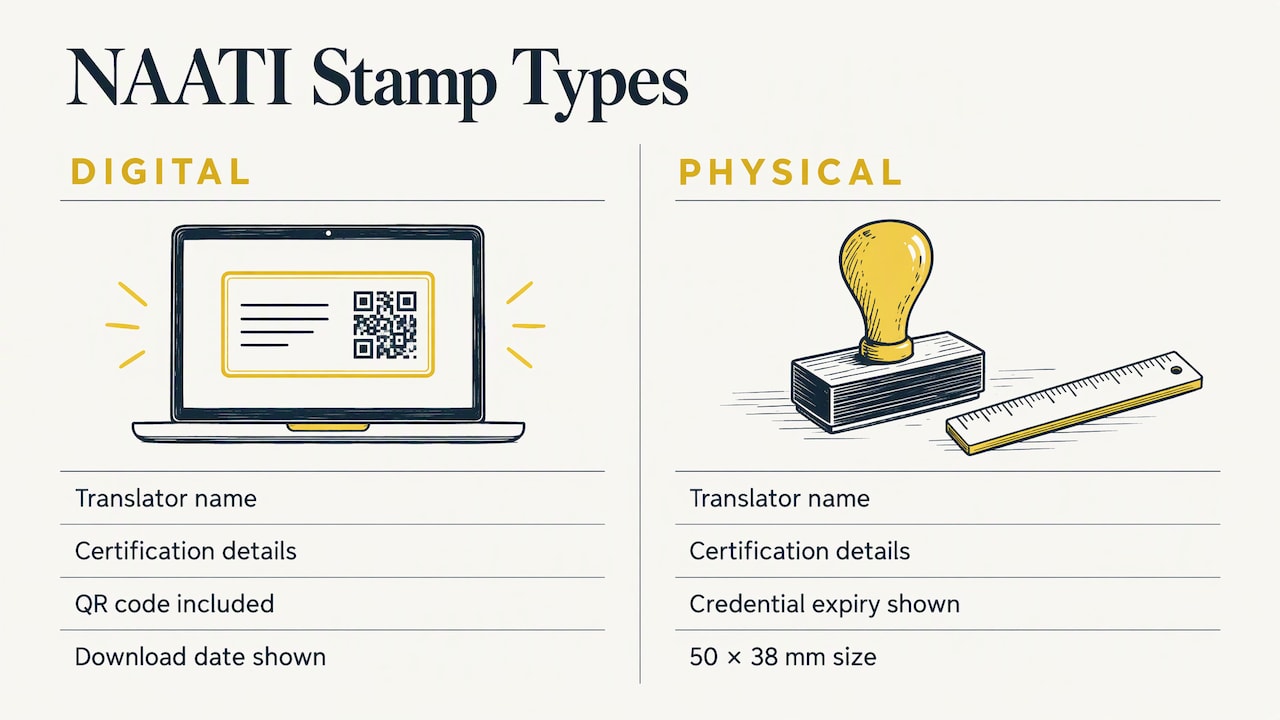
AUSIT’s style guide says certified translations should carry the translator’s NAATI stamp, and there are two types in use. The digital stamp is a rectangular stamp showing the translator’s name, certification details, a QR code and the date the stamp was downloaded. The physical stamp is a rectangular stamp, 50 x 38 mm, showing the translator’s name, certification details and the expiry date of their credentials. Either is valid.
If your translation has no stamp, or the QR code is unreadable, expect trouble. Check this before you lodge anything.
Which Spanish documents usually need translating
Most readers fall into a few groups:
- Migrants and visa applicants: birth certificates, marriage certificates, police clearances, passports, academic transcripts, and employment letters from Spain, Mexico, Argentina, Colombia, Chile and other Spanish-speaking countries.
- Students: degree certificates, transcripts and enrolment records for study in Australia, or Australian records for study abroad.
- Legal professionals: affidavits, contracts, court documents, powers of attorney and correspondence. Our guides on affidavit translation and court document translation go deeper on those.
- Businesses: company registration documents, financial statements, technical specifications and contracts.
- Drivers: a Spanish-language licence for exchange or conversion. See our page on driver licence translation for what the road authorities look for.
The type of document affects the price, the time and sometimes the format. A single-page certificate is a different job from a 40-page contract with tables and annexes.
Who accepts what: check the receiving body first
This is the step people skip, and it is where most rejections come from. There’s no single rule that covers every organisation in Australia.
A few examples from official pages:
- ASIC says that if you lodge a document that isn’t in English, you need a certified translation into English. A translation made in Australia must be certified by a NAATI Professional-level certified translator.
- The Australian Passport Office says documents not in English must be translated in full and stamped by an accredited translator before you show them to the office.
- The Australian National University accepts translations from NAATI-accredited translators and certain other approved sources. Each page must carry the translator’s signature, the date, accreditation details and an official stamp or seal. The ANU also says it can reject translations and that self-translated documents won’t be accepted.
Notice the pattern. Each body wants the whole document, a credentialed translator and a stamp on every page. But each also sets its own detail. Some want originals or certified copies to accompany the translation. Some will tell you which translators they accept.
Before you order, find the requirements page for the organisation you’re lodging with and read it. If the wording is unclear, ask the organisation what it needs. Then tell us when you place your order, so the translation is prepared to match. Our guide on what authorities accept for official document translation is a good place to start.
Preparing your Spanish document
Good preparation saves days. AUSIT’s guidance for people ordering translations is practical, and it applies to Spanish work just as it does to any language.
Send a complete, clear file
- Scan every page, including the back of a certificate if it has stamps, annotations or an apostille. A translator has to translate what is on the document, including seals and handwritten notes.
- Keep the scan sharp. Blurry dates, names and numbers are the biggest source of queries. Dark, clear scans in colour or greyscale work better than phone photos taken at an angle.
- Don’t crop. Margins often contain registry numbers or stamps that matter.
- Use an editable file where you have one. AUSIT notes that electronic files, ideally Word, are easier to work with, and that translators sometimes charge more for material that isn’t supplied electronically. For a contract or report, send the editable version as well as the signed PDF.
- Never post your only original. AUSIT advises against sending the original if you’re sending a hard copy. A certified copy or a scan is enough in most cases.
Tell us how the translation will be used
Tell us who the translation is for and what they’ve asked for: immigration, a university, a court, a bank. It lets us set up the certification correctly the first time.
Spelling of names
Spanish names have patterns that trip up English-language systems. Many people have two surnames, and women may use or drop a married name depending on country. Names on your Spanish documents should be translated consistently with your passport. If your passport spells a name differently from your birth certificate, tell us. We can follow your passport spelling, which stops a mismatch with another agency’s records.
Acronyms, glossaries and earlier translations
For business, legal or technical material, AUSIT suggests spelling out acronyms and giving the translator any glossaries or previous translations. If you’ve had earlier documents translated for the same case, send them. Keeping terms consistent across a visa file or a legal matter is worth the effort.
How long it takes
AUSIT suggests allowing two to five working days for small jobs like birth and marriage certificates. It also notes that translators work at roughly 150 to 500 words per hour depending on formatting, complexity and whether the file is electronic. Good translators can also be booked out for days or weeks.
That gives you a rough guide:
| Document type | What affects the timing |
|---|---|
| Birth, marriage or death certificate | Short and standardised, but scan quality and stamps matter |
| Police clearance, passport page | Short, but names and codes must be exact |
| Academic transcript | Tables, grading systems and course titles slow things down |
| Contract or court document | Length, legal terminology and layout |
| Technical or financial report | Specialist vocabulary, figures and formatting |
At Stellar Translations we offer fast turnaround options. If you have a hard deadline, such as a visa lodgement date, tell us when you request your quote so we can plan around it. Urgent jobs usually cost more, which is standard across the industry.
Watch for the post-translation steps too. If the receiving organisation needs the original stamped documents posted, or if the translation needs legalisation for overseas use, allow extra time.
What Spanish translation costs
AUSIT states there is no standard industry rate in Australia. Translators set their own fees, usually as a flat fee or a per-word or per-page rate. The rate depends on document type, language pair, volume, subject matter and deadline, and urgent jobs normally attract a loading.
For you, that means two things.
- Short official documents are often charged per document or per page, because certification and formatting take time regardless of word count.
- Longer documents are usually charged per word. Our certified translation starts from $0.12 per word and our standard translation from $0.08 per word. A certificate that needs official acceptance should be certified. Standard translation suits material for your own understanding or internal use, where no stamp is required.
The final price depends on the document, so send the file for a quote. Add anything unusual: a poor scan, handwriting, a table-heavy layout or a deadline. We’d rather price it properly at the start than surprise you later.
Why not machine translation for official documents
Online tools are fine for working out what a letter says. They can’t certify anything, though, and an authority that asks for a NAATI translation won’t accept raw machine output. Confidentiality is a second issue. AUSIT’s position statement on AI in translation says Australian translators follow a code of ethics that includes confidentiality, and it urges practitioners to review the terms of any software they use, including cloud storage and machine translation tools. When your document contains a passport number, a date of birth or financial details, where it goes matters.
Checking the quality of what you receive
When your translation arrives, read it against the original. You don’t need to read Spanish to do a lot of this.
- Names, dates and numbers. Compare each one with the source. AUSIT’s guidance on checking a translation includes numbers, completeness and layout. Date formats are the common trap: Spanish documents write day, month, year, so 04/05/1990 is 4 May 1990, not April 5.
- Completeness. Every stamp, seal, marginal note and letterhead should be accounted for. Seals are usually described in square brackets, for example, a note that there is a round stamp with a given text.
- The certification statement and stamp. It should have the translator’s name, their credential details and a stamp that is readable. Per the AUSIT guide, the physical stamp shows an expiry date, and the digital stamp includes a QR code.
- Layout. The translation should follow the structure of the original so a reader can compare them side by side.
- Verification. NAATI’s online directory lets you check a practitioner’s certification, and NAATI advises that you can ask for the practitioner’s number to verify it. If you work with a language service provider, NAATI recommends making sure it uses NAATI-certified practitioners.
If something is wrong, tell us straight away. Typos in a name are easy to fix when caught early, and much harder after an agency has lodged the file.
Using a Spanish translation overseas
Australian readers also need translations going the other way, such as an Australian document translated into Spanish for use in Spain or Latin America. This is where the rules change.
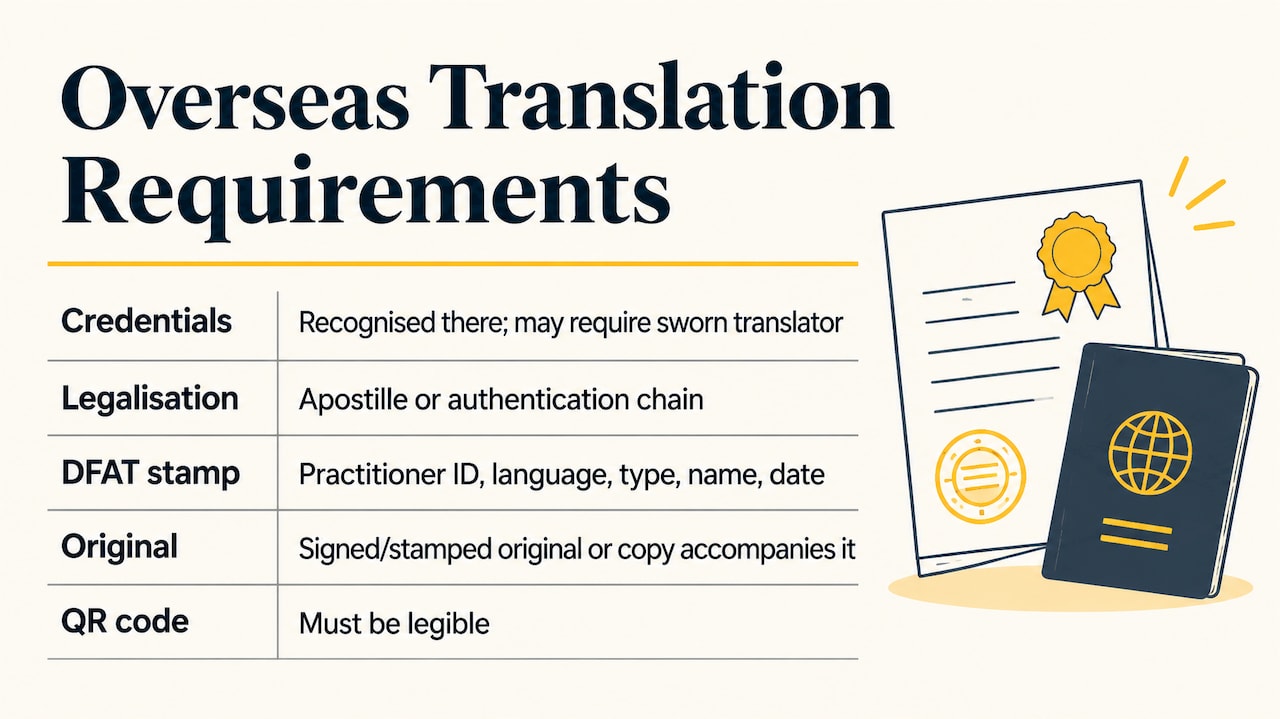
AUSIT’s style guide explains that credentials and certification processes differ between countries. A translation made in Australia for overseas use may need a translator with credentials recognised in the destination country, and the translator has to follow the end user’s certification requirements. In some countries only a sworn translator will do.
There’s also legalisation. NAATI’s DFAT requirements page explains that Australian documents often need legalisation before foreign governments or organisations accept them. This happens through an apostille, or through a chain of authentications. For a translation, what’s legalised is the NAATI translator’s signature or seal.
If you submit translations to DFAT, NAATI says every page must carry the NAATI stamp with the practitioner ID, language and certification type, the translator’s name, and the date. The original or a copy of the original, signed or stamped by the translator, must come with it. A digital stamp’s QR code must be legible.
The practical advice: before you order, ask the overseas institution exactly what it accepts. Do you need an apostille? A sworn translator in that country? A translation done there? Then we can tell you whether our NAATI translation fits, or whether another step is needed.
Why a NAATI-certified service is the safer path
Doing the translation yourself, or asking a bilingual friend, can look like a shortcut. For official use it usually isn’t. The ANU, for example, says self-translated documents won’t be accepted. Other organisations take the same line, and a rejected translation costs you time and a second round of fees.
When you order from us, you get:
- NAATI-certified translation that meets official requirements across Australia
- Spanish and over 170 other languages, so if your file has a mix, such as a Spanish certificate plus Portuguese or Italian records, it can all be handled in one place
- Legal expertise. We’ve worked with legal documents since 2000, so contracts, affidavits and court documents get translators used to the terminology
- Confidentiality for personal and commercial documents
- Fast turnaround when you’re up against a deadline
Our NAATI document translation guide walks through the process in more detail, and if you’re in Victoria, our page on NAATI translation services in Melbourne is a good fit.
Ready to get your Spanish document translated?
Send us your scan with a note on who the translation is for, and we’ll quote it. We translate personal, legal, immigration, academic, medical, financial and business documents, with NAATI certification where the receiving organisation needs it.
Start with our certified and standard translation page for pricing, or go to the Stellar Translations homepage to request a quote. For specialist material, see our guides on certified technical translation and medical translation.
FAQ
Do I need a NAATI-certified Spanish translation for my visa?
In most cases, yes. Immigration and other government bodies generally expect documents not in English to be translated by a NAATI-credentialed translator. Check the specific requirement for your application, and tell us which body you’re lodging with so we prepare the translation to suit.
How is a certified translation different from a standard one?
A certified translation is done by a NAATI-credentialed translator who adds their name, stamp and certification statement. A standard translation has no certification, so it suits your own reading or internal business use rather than lodging with an authority. Our certified translation starts from $0.12 per word and standard from $0.08 per word.
Can I send a phone photo of my document?
Often you can, if every page is flat, sharp and fully in frame, including stamps and edges. A clean scan is better, especially for dates, ID numbers and handwriting. If the image is hard to read, we’ll let you know before starting.
How long does a Spanish certificate translation take?
AUSIT suggests allowing two to five working days for small jobs like birth and marriage certificates. Length, complexity and file quality all affect it. If you have a deadline, mention it when you ask for a quote, because we offer fast turnaround options.
Will my translation be accepted overseas?
Not always. Other countries may require a sworn translator, an apostille or their own certification process. Ask the overseas institution what it accepts before you order, and we’ll advise on how our NAATI translation fits.