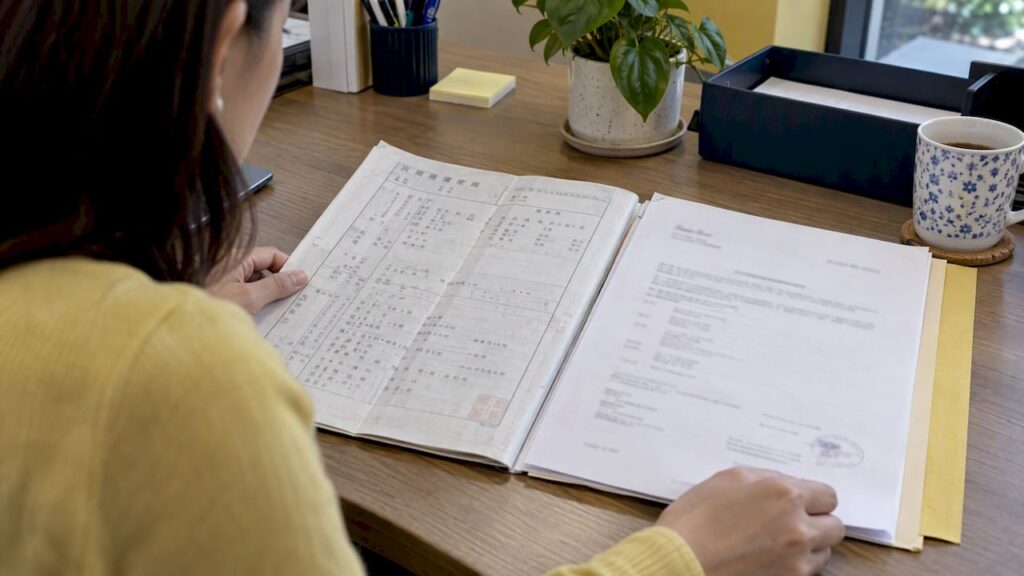
A certified technical translation is a translation of a technical document, such as a manual, specification, safety document or regulatory file, that a NAATI-credentialed translator has signed off with their name, stamp and a statement that it is true and accurate. You need one when an Australian agency, regulator or court will rely on the document. You don’t need one for most internal or marketing use. This guide explains how to tell which case you are in, what the certification must contain, and how to brief a translator so the technical content comes out right.
TL;DR
- In Australia, a certified translation is done by a translator holding a valid NAATI credential, who adds their name, stamp and certification statement.
- Regulators such as ASIC, AHPRA, AICIS and DFAT ask for NAATI-certified or equivalent translations when you lodge documents that are not in English.
- Accuracy in technical work comes from the brief: a glossary, the layout, graphics and tables, units and a named contact for questions.
- Manuals and user guides for general use can often be translated without certification, but safety-critical material deserves a qualified translator and a second review.
- Stellar Translations offers NAATI-certified translation from $0.12 per word and standard translation from $0.08 per word.
Table of Contents
- What certified technical translation actually means
- When technical documents need certification in Australia
- What a certified translation must include
- Which technical documents we see most
- How technical documents are translated accurately
- What to give your translator
- Technical manual and user manual translation: is certification needed?
- Checks before you submit or publish
- Our technical translation service
- A short checklist before you order
- FAQ
What certified technical translation actually means
Two things are combined in this phrase: subject expertise and formal certification.
Technical translation is the translation of content where terminology, numbers and structure matter more than style: engineering drawings, equipment manuals, test reports, chemical documentation, software guides, OHS procedures.
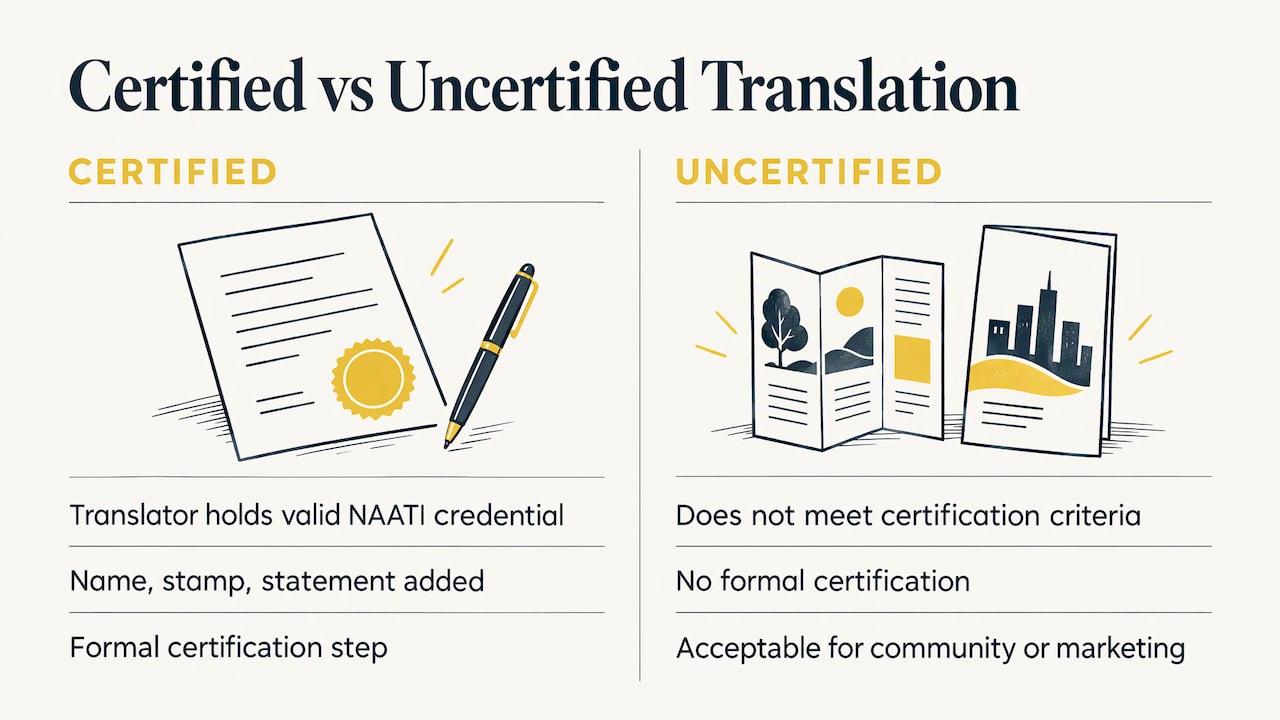
Certification is the formal step. According to the AUSIT best practice guide for official and legal documents, a certified translation in Australia is one undertaken by a translator awarded a relevant and valid NAATI credential, who certifies it by adding their name, stamp and certification statement. Translations that don’t meet those criteria are uncertified. The same guide notes they are acceptable for purposes such as community translations or business marketing, where the translator does not need to certify the work.
So the difference between ordinary and certified technical translation is not the quality of the wording. It is who stands behind the translation formally, and whether an official body will accept it.
When technical documents need certification in Australia
There is no single rule that covers every technical document. The requirement comes from the body you are submitting to. These examples from Australian authorities show the pattern.
| Body | What it says about non-English documents |
|---|---|
| ASIC | A non-English document lodged with ASIC needs a certified English translation. A translation made in Australia must be certified by a NAATI Professional certified translator (ASIC). |
| AHPRA | Documents supporting applications must come with an English translation. If translated in Australia, the translator must be NAATI accredited (AHPRA fact sheet). |
| AICIS | Non-English documents need an English translation from an approved or accredited translator, with a statement that it is true and accurate, including the translator’s name and stamp, seal or identification number (AICIS). |
| DFAT | Since 1 July 2018, only translations by translators with NAATI certification issued under the current system are accepted (NAATI). |
The general position is set out in NAATI’s FAQ: most Australian government agencies require translation by a NAATI-certified translator where one is available in the language. AUSIT adds that for official purposes it is the applicant’s responsibility to arrange the translation before lodging an application or attending an interview (AUSIT FAQ).
In practice, you are likely to need certification for:
- Technical qualifications, licences and trade certificates used in a skills or registration application.
- Chemical, product or test documentation lodged with a regulator.
- Patent filings and supporting evidence (see our guide to patent translation in Australia).
- Technical reports, expert statements or affidavits used in court (see court document translation and affidavit translation).
- Safety data sheets where a regulator or counterparty requires a certified version (see safety data sheet translation).
Always read the receiving body’s own instructions first. They define what they will accept, and a quick check saves paying twice.
What a certified translation must include
A certified translation is more than translated text. The certification elements are specific, and officials check them.
The statement, the stamp and the details
The Australian Government Language Services Guidelines say a NAATI-credentialed translator certifies that the translation is true and accurate to the best of their knowledge. They should affix their personal NAATI-issued stamp. They should also add their name, NAATI credential details, language and language direction, date and signature.
AUSIT’s style guide recommends the certification statement appear at the bottom of each page, along the lines of: the translator, with their name and certification details, certifies that this is a true and accurate translation, to the best of their skill and ability, of the source-language text in the attached document.
Every page matters
For DFAT, NAATI’s requirements say the stamp information must be on every translated page. That means the practitioner ID, language and type of certification, the translator’s name, the date, and a signature for a physical stamp. For a digital stamp it means the “Digitally Authenticated by NAATI” wording and a legible web address under the QR code. If you are translating a 40-page technical manual for an official submission, expect every page to carry this.
The source document image
AUSIT explains that the translator places an image of the source document on the back of the translation, with their stamp, signature and date. This shows which document was used. Officials may ask to see the original to compare it with that image (AUSIT FAQ). So send a clear, complete scan of the original, not a cropped photo.
What the “valid to” date means
NAATI stamps are blue ink. The “valid to” date on them refers to when the translator’s credential must be renewed, not a date after which your translation expires (NAATI stamp information). NAATI’s view in that document is that a translation dated within the credential’s validity period should be accepted, and that the translation remains valid indefinitely. Check the translation date, not only the stamp date.
Which technical documents we see most
Technical documents cover a lot of ground. The categories below are where the certification question comes up most.
- Technical manuals and user manuals. Operating instructions, maintenance guides, installation manuals. Certification is only needed if an authority or contract demands it, for example a conformity file lodged with a regulator.
- Specifications and engineering reports. Often part of tenders, import approvals or professional registration.
- Safety and compliance documents. Safety data sheets, OHS procedures, induction material.
- Intellectual property. Patent specifications and claims.
- Medical device and health documentation. Our medical translation service handles clinical and device-related text.
- Legal-technical hybrids. Expert reports, contracts with technical schedules, court evidence. Our legal translation team works with these.
We offer translation in over 170 languages, and our own positioning is built on NAATI-certified work and specialised expertise in legal and technical documentation. NAATI certification is not available in every language pair, so for rarer languages ask early what credential options exist.
How technical documents are translated accurately
Accuracy in technical translation is mostly process. A mistranslated tolerance, unit or warning is not a style problem. It can be a safety problem.
The workflow
A structured technical manual project typically runs like this:
- Scope the project and identify risks. Which parts are safety-critical, which formats are involved, who will use the translation.
- Build a bilingual glossary. Agree the term for each component, part and process before translating.
- Reuse approved material. If earlier translations exist, they keep terminology consistent across documents and versions.
- Translate with subject review. A translator familiar with the field, with a specialist checking terminology where needed.
- Adapt layout. Translated text often runs longer or shorter, so tables, callouts and page breaks need adjusting.
- Quality assurance and sign-off. A linguistic check, then certification if required.
- Deliver with version control. Final files, clearly labelled to match the source version.
The Australian Government guidance also suggests considering a back translation into English for quality assurance, which is useful for high-stakes content.
Qualified translators for safety content
The Victorian WorkSafe compliance code on communicating OHS across languages says employers should use a professional, accredited translator for complex or technical information, such as important safety material, induction manuals and specific control measures. It adds that the translator should preferably be familiar with OHS and experienced in this kind of text.
The same code points out that some translators are accredited in one direction only, for example English to Mandarin but not the reverse. If you need both directions, confirm that the translator holds the credential for each.
Writing the source so it translates well
The source text sets the ceiling. Habits that help:
- Use the same name for the same component every time.
- Write clear, unambiguous sentences, and use controlled language for safety-critical steps.
- Avoid embedding text inside images. Use numbered callouts that point to a legend that can be translated.
- State measurements and units explicitly.
- Start from plain English. WorkSafe notes that a clear original produces a better translation.
What to give your translator
The Government’s language services guidelines list what a good brief contains. For technical manuals, prepare:
- The intended audience: installers, operators, regulators, end users.
- A glossary of specialised terms, with a short explanation of common words and phrases that could be read two ways.
- The layout required, and the editable source files where possible.
- Graphics, tables and any other material to be included.
- Software requirements for the final files.
- The final format you need.
- A contact person who can answer terminology questions during the project.
- Your deadline, plus delivery and address requirements.
- Whether professional indemnity insurance cover is required.
If the translation is for an official body, add the name of the body and a link to its translation requirements. We then know up front whether to certify, how to stamp and how to lay out each page.
Technical manual and user manual translation: is certification needed?
Often it is not. A user manual for a product sold to consumers is usually published, not lodged, and no official body checks the translator’s credential. A professional translation without formal certification fits that purpose, in line with AUSIT’s note that uncertified translation is acceptable where certification is not required.
Certification becomes relevant when the manual is part of something an authority will assess. Examples include a technical file for product approval, evidence in a dispute, or documents supporting a registration or visa application. Even where certification is not required, safety manuals, operating procedures and compliance material benefit from a qualified translator, a glossary and a second review.
A simple decision guide:
| Situation | Certification likely needed? |
|---|---|
| Manual lodged with a government agency or regulator | Yes, check the agency’s rules |
| Manual used as evidence in court | Usually yes, confirm with the court or your lawyer |
| Manual supporting a visa, registration or licence application | Yes, for official purposes NAATI certification is expected |
| Customer-facing manual for a product launch | Not usually, but use a professional technical translator |
| Internal training material for a multilingual team | Not usually, but safety content needs an accredited translator |
Checks before you submit or publish
You don’t need to read the target language to catch many problems. NAATI’s guidance on reviewing translations suggests a visual and structural review:
- Is the translated text roughly the same length as the original? A big gap can signal omissions.
- Does the formatting match?
- Do numbers and symbols match, including units, dates and part numbers?
- Are there any typing errors?
NAATI also advises a second review for legal documents, public communications, health information, safety manuals, anything that needs precision, and any translation created or assisted by AI or machine translation tools.
WorkSafe adds one more practical step: have the translation checked for comprehension by members of the target language group who will use it. For a workplace manual, that means asking a few operators whether the instructions make sense.
Our technical translation service
We have provided translation since 2000, working with experienced translators across more than 170 languages. For technical and official documents, our NAATI-certified service is designed to meet the requirements of Australian agencies, with fast turnaround options and a firm focus on confidentiality.
If your document needs to be accepted by an authority, start with our NAATI document translation guide, or if you are in Victoria, read about NAATI translation services in Melbourne. When you are ready, send your file through our certified translation page and tell us which body will receive it.
Pricing
Our published rates are per word: certified translation from $0.12 per word and standard translation from $0.08 per word, as listed on our site. Technical content, layout work and urgent delivery can affect the final quote, so send the document for an accurate figure. Standard translation suits material that needs no certification, such as an internal manual. Certified translation is for documents that an official body will assess.
A short checklist before you order
- Confirm whether the receiving body requires NAATI certification, and read its instructions.
- Gather a complete, legible scan or the editable files.
- Prepare a glossary and mark safety-critical sections.
- Note the language pair and direction.
- Say when you need it and how it will be delivered.
- Plan a second review of the finished translation.
FAQ
What is the difference between technical translation and certified technical translation?
Technical translation focuses on getting specialist terminology, numbers and structure right. Certified technical translation adds formal certification: a translator with a valid NAATI credential adds their name, stamp and a statement that the translation is true and accurate. Only the certified version is accepted by most Australian agencies for official purposes.
Does a technical manual need to be certified?
Only if an authority, court or contract requires it. A manual published for customers usually does not. A manual lodged with a regulator, or used to support an official application, usually does, so check the receiving body’s rules first.
How long is a certified translation valid?
NAATI’s position is that a translation by a NAATI-credentialed translator remains valid indefinitely. The “valid to” date on the stamp refers to the translator’s credential renewal, not the life of your translation. The receiving body can still set its own rules, so confirm with it.
Can I translate my own technical documents and have them certified?
Certification must come from a translator holding a valid NAATI credential, who takes responsibility for the translation with their name and stamp. A draft you prepared cannot be certified as is. Most agencies expect the full translation to be done by the certified translator, so it is simplest to commission it that way.
What should I send to get an accurate quote?
Send the document in its original, complete form, the language pair, the body that will receive it and your deadline. A glossary and any editable source files help with technical content. Prices start from $0.12 per word for certified translation.