To book an interpreter in Melbourne, decide whether you need spoken help (an interpreter) or a written document (a translator). Then choose the format, phone, video or onsite, and check the interpreter’s NAATI credential before the session. This guide covers each step, the free services that exist, what paid interpreting can cost and how to prepare so the session runs smoothly.
TL;DR
- An interpreter works with speech, in real time. A certified translator works with written documents. Many Melbourne situations need both.
- Phone interpreting is the quickest and cheapest format. Video and onsite suit longer, sensitive or complex appointments.
- Ask for a NAATI-credentialed interpreter. Victorian Government guidelines say Certified Interpreters should be engaged where possible.
- Interpreting is free in some settings, such as public hospitals and certain Medicare-rebatable GP visits. Check before you pay.
- Give the booker the language (and dialect), the topic, the location and any gender preference, so the right person is sent.
Table of Contents
- Interpreter or translator: which do you need?
- The formats: phone, video and onsite
- Who provides interpreting in Melbourne
- NAATI credentials: what to check
- How to book an interpreter
- What interpreting costs, and when it is free
- Interpreting with Stellar Translations
- Preparing for the session
- When your matter also needs written translation
- FAQ
Interpreter or translator: which do you need?
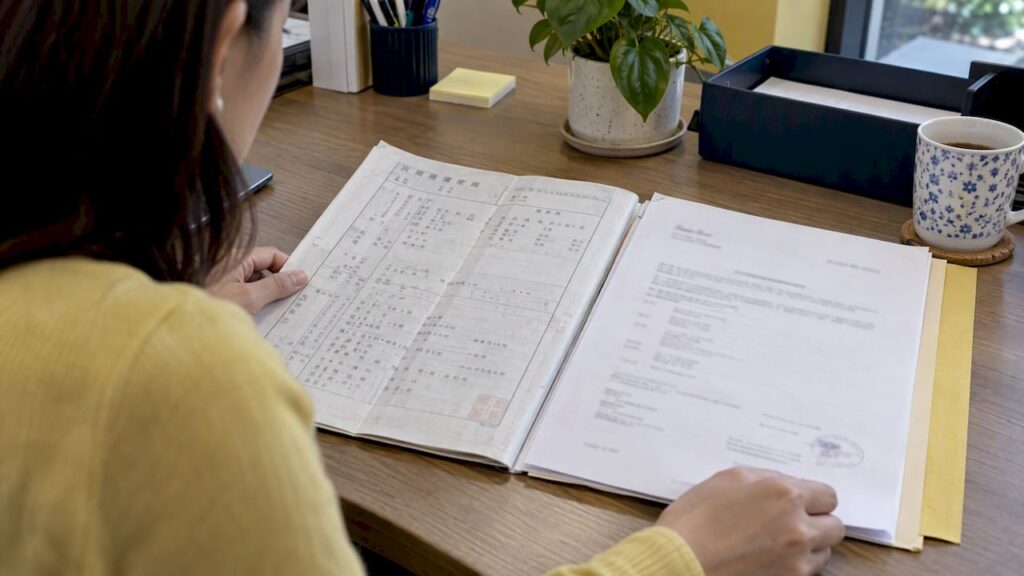
An interpreter converts spoken (or signed) language between people, usually as the conversation happens. A translator converts written text, such as a birth certificate, a court document or a contract, into another language. The skills overlap, but the work, the tools and the credentials are different.
A simple way to decide:
- A conversation, meeting, appointment or hearing: you need an interpreter.
- A document you must submit to an authority, school, court or employer: you need a certified translator.
- Both: for example, a migration or legal matter where you attend an interview and also lodge supporting documents.
For documents, we handle NAATI-certified translation, and our guide to NAATI translation services in Melbourne explains what authorities usually expect. This article stays with interpreting.
The formats: phone, video and onsite
Melbourne organisations typically offer three ways to reach an interpreter. Large health services show how the mix works in practice: Monash Health provides onsite, video (telehealth) and telephone interpreters at all its locations, 24 hours a day, 7 days a week. The Royal Melbourne Hospital says its interpreting can be provided in person, by video conference or over the phone, in more than 160 languages including Auslan.
Telephone interpreting
Phone is the fastest option. The Translating and Interpreting Service’s guidance for agencies describes it as the quickest and most affordable way to obtain interpreting, and notes it can offer a more anonymous service. It suits short enquiries, urgent calls, after-hours situations and appointments where an in-person interpreter cannot attend. Hospitals use it as a back-up too: the Royal Melbourne Hospital says it can contact a telephone service around the clock, including weekends and public holidays, when no in-person interpreter is available.
Video interpreting
Video gives you the interpreter’s face and body language without the travel. It works well for telehealth, remote legal conferences and business meetings where participants are in different places. It is also the usual route for sign language when an interpreter cannot attend in person, though you should confirm availability for Auslan early.
Onsite (face-to-face) interpreting
Onsite is worth the extra planning for long, emotionally heavy or technical sessions: complex medical consultations, mediation, court-related meetings or multi-party business negotiations. TIS National says onsite interpreting can be arranged for any location in Australia, subject to interpreter availability, so book early, especially for less common languages.
| Format | Best for | Lead time | Watch out for |
|---|---|---|---|
| Phone | Short, urgent or after-hours needs | Minutes for immediate calls | Harder for long or multi-person sessions |
| Video | Telehealth, remote meetings, Auslan | Pre-booked is safest | Needs a stable connection and a quiet space |
| Onsite | Long, sensitive or complex sessions | Book as early as possible | Availability in rarer languages |
Who provides interpreting in Melbourne
Interpreting in Melbourne comes from several types of provider, and the right one depends on who you are and where you are going.
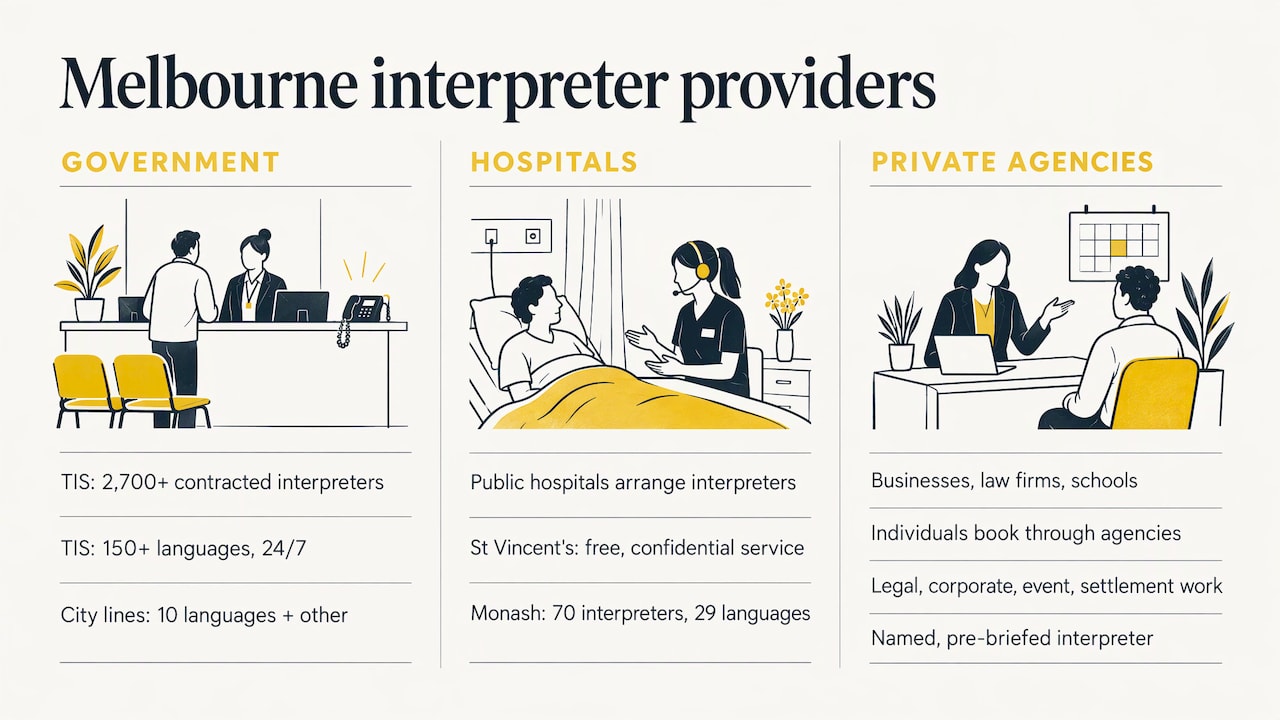
Government services. TIS National, run by the Department of Home Affairs, serves people with limited English and agencies that need to communicate with them. It says it can draw on more than 2700 contracted interpreters speaking more than 150 languages, available 24 hours a day, every day of the year. The City of Melbourne also runs Multilingual Information phone lines: ten numbers for specific languages and one for languages not listed. They operate from 9am to 5pm, Monday to Friday, and messages left outside those hours are returned the next working morning.
Hospitals and health services. Public hospitals arrange interpreters for patients. St Vincent’s Hospital Melbourne says its staff interpreters provide free, confidential interpreting in Greek, Chinese (Simplified Chinese, Mandarin, Cantonese, Hakka), Vietnamese, Italian, Arabic and Macedonian, with other languages available on request, and patients can ask a doctor or nurse to organise one. Monash Health reports a team of 70 in-house interpreters covering 29 languages and dialects.
Private language service providers. Businesses, law firms, schools and individuals who do not qualify for free services book through private agencies. These suit private legal matters, corporate meetings, events, settlement appointments and anything that needs a named, pre-briefed interpreter. This is where Stellar Translations can help, and we cover that below.
NAATI credentials: what to check
NAATI is the national standards body for translators and interpreters in Australia. Its Online Directory is described as Australia’s only official directory of NAATI-certified translators and interpreters, and it is the place to confirm a practitioner’s credential. NAATI does not employ interpreters itself, so you always book through a provider or the practitioner directly.
The Victorian Government’s guidance on the NAATI system sets out the credentials you will meet:
- Certified Interpreter: for complex, non-specialised conversation. This is the credential Victorian policy says should be engaged first.
- Certified Provisional Interpreter: for general conversations in non-specialist areas.
- Recognised Practising Interpreter: for languages where NAATI certification testing is not available.
If no Certified Interpreter is available in your language, a provisional or recognised practising interpreter may be the only option. For rarer languages that is normal, so ask the provider what credential the assigned person holds.
Ethics matter as much as credentials. The Victorian Government states that interpreters must, as a condition of ongoing accreditation, follow the AUSIT Code of Ethics, and Auslan interpreters must also follow the ASLIA code. In practice this means impartiality, confidentiality and complete, accurate interpreting for both parties. Monash Health describes this as a medico-legal duty for its NAATI-accredited interpreters.
A practical rule: never use a family member or friend as the interpreter for medical, legal or financial matters. They are not bound by a code of ethics, and they may soften, skip or add information without meaning to.
How to book an interpreter
If you need help right now
If you do not speak English and need to contact an organisation immediately, TIS National tells callers to ring 131 450, say their language when prompted and stay on the line while an operator finds an interpreter. You will be asked for your name, the organisation you want to contact and its phone number, and sometimes an identification or claim number. Have those ready.
If you are booking ahead
For planned appointments, follow these steps:
- Confirm the language and dialect. Mandarin and Cantonese, or Dari and Farsi, are not interchangeable. If unsure, ask the person who will use the interpreter.
- Choose the format. Use the table above. Pre-booked phone is a sensible default for short sessions.
- State the subject. TIS National’s guide for agencies lists specialist knowledge for legal or medical matters among the points to raise when booking.
- Mention sensitivities and gender needs. The same guidance notes that gender requirements can apply in some circumstances, such as medical appointments or domestic violence situations.
- Give the logistics. Date, start time, expected length, address or link, and a contact person.
- Ask for the credential. Request a NAATI-credentialed interpreter and confirm the level.
Agencies that book regularly can use TIS Online, which TIS National describes as a self-service portal for requesting and managing pre-booked phone, onsite and video interpreting.
What interpreting costs, and when it is free
Cost depends on who is paying and where the session happens.
Free interpreting
Some settings carry no charge to the person who needs the interpreter. Eastern Health states that its interpreting and translation services are free, and that patients who have difficulty communicating in English are entitled to a certified interpreter. The same applies at other public hospitals, as the St Vincent’s information above shows.
TIS National also has a free interpreting service for eligible groups. According to its guide for agencies, these include:
- medical practitioners delivering Medicare-rebatable services in private practice
- pharmacies dispensing medication and giving general advice
- non-government organisations doing casework and emergency services without substantial government funding
- real estate agencies for private residential property matters
- local government authorities, trade unions and parliamentarians
- eligible allied health professionals in specific circumstances
If you are a patient, ask the clinic or hospital to arrange the interpreter rather than bringing your own.
Paid interpreting
Outside those settings, someone pays. For a sense of scale, the TIS National schedule of charges as adapted by a NSW government agency, effective 1 July 2024, lists immediate phone interpreting at $33.22 including GST for the first 15 minutes, and pre-booked phone interpreting at $70.62 including GST for the first 30 minutes. Treat these as indicative only: rates change, and private agencies set their own pricing based on language, format, duration, notice and travel.
When you request a quote, ask what is included: minimum booking length, cancellation terms, travel time for onsite work and whether after-hours rates apply.
Interpreting with Stellar Translations
Stellar Translations has provided professional language services since 2000, working in over 170 languages with a strong focus on accuracy and confidentiality. Our NAATI-certified service is built for people and organisations who need their language work to hold up with official bodies in Australia. If you need an interpreter for a legal, business, medical or personal matter in Melbourne, you can start with our interpreting services page and tell us the language, topic and format you need.
Many clients arrive needing both voice and paper: an interpreter for a meeting and a certified translation of the documents behind it. Our certified translation starts from $0.12 per word and standard translation from $0.08 per word, as published on our translation FAQ. Interpreting is quoted to the job, so there is no published rate for it.
Preparing for the session
A good interpreter can only work with what they are given. A few habits make a large difference.
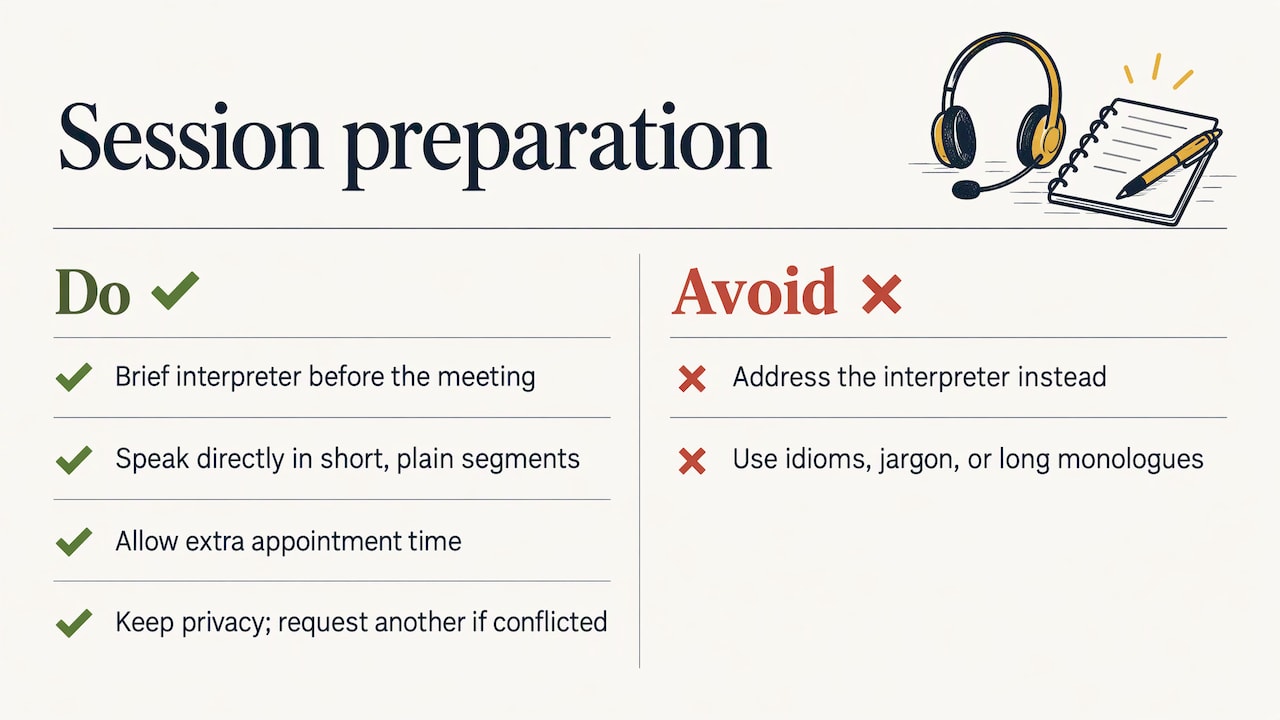
Brief the interpreter. Share the purpose of the meeting, an agenda and any technical terms or names beforehand. For a legal or medical session, a short summary lets the interpreter prepare vocabulary.
Speak to the person, not the interpreter. Look at the person you are speaking with and use the first person (“I recommend…”, not “tell her I recommend…”). The interpreter will do the rest.
Use short segments. Speak in a few sentences, then pause. Long monologues force the interpreter to compress, and detail gets lost.
Avoid idioms and jargon. Phrases like “touch base” or “ballpark figure” translate poorly. Plain language is interpreted more accurately.
Allow extra time. A conversation through an interpreter typically takes longer than one in a shared language, so plan the appointment length accordingly.
Keep it confidential. Interpreters work under a code of ethics, so you can speak openly. If a conflict of interest arises, for example the interpreter knows the person personally, say so and ask for someone else.
When your matter also needs written translation
Interpreting leaves no paper trail, so authorities generally want written evidence translated by a certified professional. Common cases in Melbourne include:
- Court and tribunal matters: see our guide to court document translation and affidavit translation.
- Government and migration paperwork: our overview of official document translation explains what authorities usually accept.
- Driver licences and identity documents: see driver licence translation.
- Technical or specialist files: our certified technical translation guide covers the process.
Plan the written side early. Translating documents before the appointment means the interpreter and the professional you meet are both working from the same terminology.
FAQ
Is an interpreter the same as a translator?
No. An interpreter handles spoken or signed communication in real time, while a translator works on written documents. Each has different training and credentials, although both can be NAATI certified. If you have a meeting and paperwork, you will probably need both.
How quickly can I get an interpreter in Melbourne?
Phone interpreting is the fastest. TIS National says its service operates 24 hours a day, every day of the year, and callers on 131 450 stay on the line while an operator finds an interpreter. Video and onsite sessions take more planning, so book as early as you can, particularly for less common languages.
Do I have to pay for an interpreter at a Melbourne hospital?
Generally no. Eastern Health, St Vincent’s Hospital Melbourne and Monash Health all describe arranging interpreters for patients, and Eastern Health states its interpreting is free of charge. Ask the doctor, nurse or reception to arrange one when you book or arrive.
What NAATI level should I ask for?
Ask for a Certified Interpreter first. Victorian Government guidance says these are the credential that should be engaged, with Certified Provisional or Recognised Practising Interpreters as options when a Certified Interpreter is not available, which is common for rarer languages. You can verify any practitioner in the NAATI Online Directory.
Can a family member interpret for me?
For medical, legal and financial matters it is better to use a professional. Credentialed interpreters follow the AUSIT Code of Ethics, which covers impartiality, confidentiality and accuracy. A relative is not bound by it and may be too close to the matter to interpret every detail faithfully.